Coordinating the Attacking Corner
When analyzing attacking corner data provided by agencies like StatsBomb and Wyscout, the numbers consistently tell a clear story: the delivery zone and the timing of the runs are far more crucial than the sheer volume of players thrown into the penalty area. Modern set-piece coaches like Nicolas Jover (Arsenal) and Gianni Vio emphasize creating structural chaos within the opposition's defensive block.
The Near-Post Flick-on
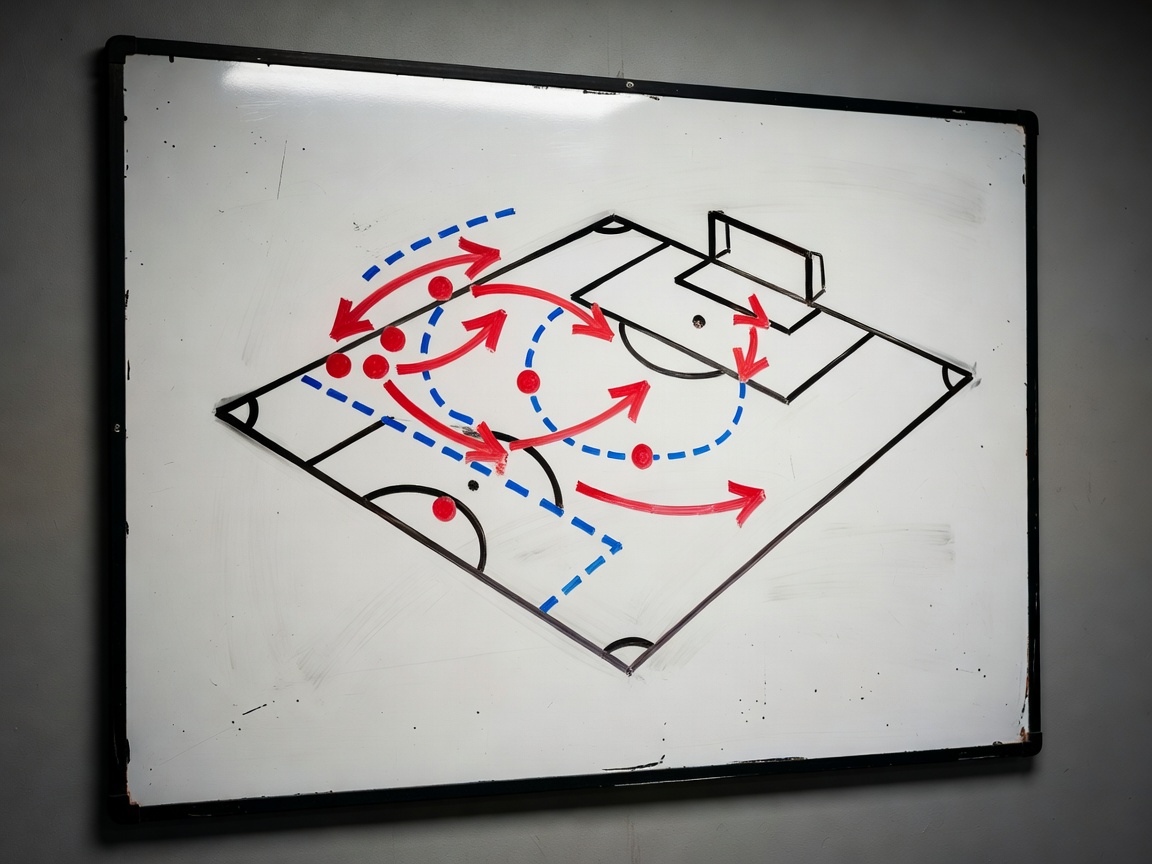
One of the most effective and universally taught routines at both academy and senior professional levels is the near-post delivery. The objective here is not necessarily for the first contact to result in a direct shot on goal, but rather to disrupt the defensive shape.
- The Delivery: An inswinging ball targeted just outside the six-yard box, ahead of the near post.
- The Runner: Usually the most aggressive aerial attacker, tasked with losing their marker via a double-movement or a screen set by a teammate.
- The Second Phase: Three players making coordinated runs to the back post, central goal area, and edge of the box to react to the flick-on.
Blockers are players whose primary responsibility is not to win the ball, but to legally obstruct the opposition's best aerial defender (or their zonal anchor). This creates a 'free' run for your primary target. Ensure blockers stand their ground rather than actively stepping into the defender to avoid offensive fouls.
Edge of the Box Organization
The success of an attacking corner is heavily reliant on edge-of-the-box management. Teams often neglect this area, leading to poor ball retention and vulnerability to counter-attacks. Placing two technically gifted players on the edge of the 'D' serves a dual purpose:
- Second Ball Retrieval: Picking up clearances to recycle possession or strike from distance.
- Preventing Transitions: Stifling the opposition's outlet pass immediately if the ball is cleared centrally.
Short Corners to Change Angles
A short corner isn't just about retaining possession; it fundamentally alters the defensive block. By playing a short pass, you force the opposition's zonal marking line to step up and readjust. This momentary lapse in marking structure opens gaps at the back post.
A common setup utilized in the Premier League and Serie A involves a 2v1 on the short corner flag. If the defense sends two players out to neutralize the threat, the box naturally becomes less congested, favoring an outswinging cross directed toward the penalty spot.
Summary of Attacking Responsibilities
| Role | Primary Task | Secondary Task |
|---|---|---|
| Taker | Consistent delivery into designated zone | Provide passing option for short variations |
| Near Post Target | Attack the ball for a flick-on or shot | Drag zonal markers out of position |
| Blockers (1-2) | Impede opposition's best headers | Create space for late runners |
| Edge/Rest Defence | Win second balls and clear-outs | Prevent counter-attacking transitions |